Fifty Posts at a Time: What Kenya's AI Case Means for 2027 General Elections
19 September 2026 · 2 min read · Trust Institute Africa
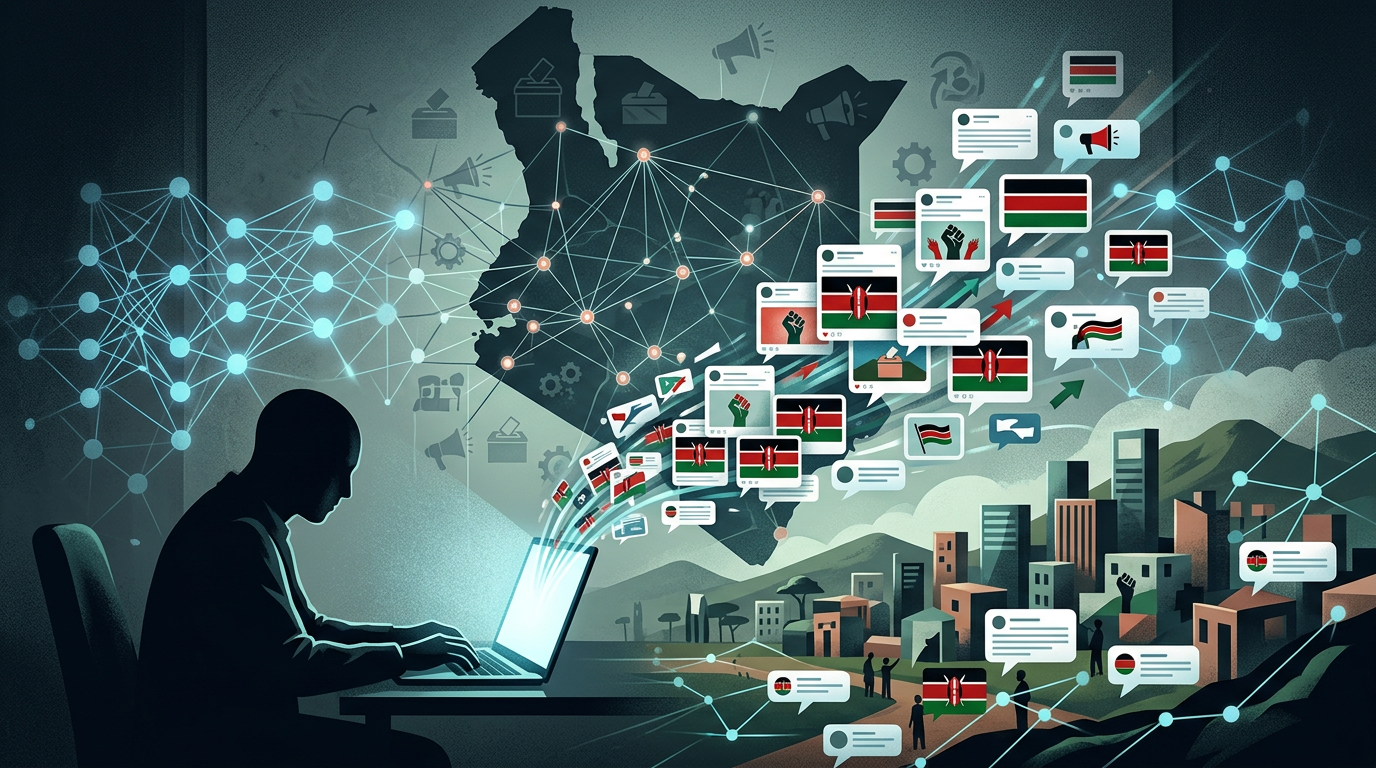
A recent Anthropic report shows how one operator used AI to make coordinated political messaging look like the voice of ordinary Kenyans. With the 2027 General Elections approaching, Kenya needs stronger safeguards—and citizens need sharper digital judgment.
Anthropic, the company that owns Claude AI, issued a report (Detecting and countering misuse of AI: September 2026) recently which every Kenyan should read, because it affects them directly.
The company reported that a series of tweets praising a Cabinet Secretary who stopped a power tariff hike were fake. It looked like ordinary Kenyans speaking. But in actual sense, it was the work of a single operator using Claude.
This reminded me of Cambridge Analytica. In 2018, the UK company was accused of using more or less the same tactics to influence Kenyan presidential elections. Both efforts tried to make organized messaging look like the voice of ordinary people, while hiding the identity of the people who paid for them.
On 10 September 2026, Anthropic reported that a Kenyan actor used Claude to churn out political posts in batches of exactly 50. Hashtags like #PowerReliefKE praised Energy CS Opiyo Wandayi; other posts claimed the United Opposition was cracking. Anthropic found no government involvement.
Kenyans will go to the polls in August 2027. Kenyans should expect more of these smear campaigns and propaganda. If one person did this with a chatbot, a political campaign machinery with a budget can do it in Swahili, Sheng and mother tongues. Any political camp, in any county, can buy the same trick.
Kenya's draft AI Policy closed public comment on 4 August, and the AI Bill, 2026 is still in Parliament. The government should move fast and enact a law governing AI use before the elections. Additionally, it can put these rules into place: making it compulsory to have labels on AI-made political content, platform take-downs of fake networks, public and political parties to report digital campaign spending, and the electoral agency, IEBC, to come up with guidelines for online conduct.
What you can do as an individual
Check the account that is sending out the message. A profile made last month, with no personal photos and hundreds of posts a day, deserves doubt. Watch for identical phrasing across accounts, and hashtags that surge in the same minute. Search a claim on PesaCheck or Africa Check before you share it. Report what looks fake.
Proverbs 14:15 says the prudent watch their steps. Be careful what you read, what you believe and what you share online. It is better to be cautious than to regret.
This latest AI case matters because it shows how far the price has dropped. In 2017, that kind of messaging needed a London firm, surveys and a team of writers. Now, one person with a chatbot can fake a crowd. That makes the law and the safeguards in the article more urgent as we come to the end of 2026.
#Kenya #AIPolicy #Elections2027 #TrustInstituteAfrica
Enjoyed this article?
Join thousands of African leaders receiving Trust Briefing. Subscribe and receive future insights automatically.
Measure the Trust in Your Organisation
Book a Trust Assessment or complete the TRUST Index™ to see where confidence is strongest — and where it is leaking.